Camp Cooking Basics: Simple Meals, Smart Kitchens
How to set up an efficient camp kitchen, plan easy meals, cook safely over a stove or fire, keep food cold and clean up without leaving a trace.
Food tastes better outdoors. Maybe it is the fresh air, maybe the appetite you build on a hike, but a simple meal at a picnic table under the pines can rival a restaurant dinner. Getting there does not require fancy gear. It requires a little planning, an organized kitchen and a few good habits.
Plan meals before you shop
The biggest camp-cooking mistakes happen at the grocery store. Plan each meal before you shop:
- Pick familiar recipes. A camp stove is not the place to test a new dish.
- Favor one-pot or one-pan meals. Fewer dishes mean less water, less fuel and less cleanup.
- Front-load perishables. Eat fresh meat and dairy early in the trip; save shelf-stable foods for later days.
- Prep at home. Chop vegetables, pre-mix spices, marinate meat and pre-cook rice or grains. Store them in labeled containers.
A simple three-day sample menu
- Day 1 dinner: foil-pack or skillet fajitas with pre-sliced peppers and onions.
- Day 2 breakfast: scrambled eggs with pre-cooked potatoes and cheese.
- Day 2 dinner: one-pot pasta with sausage or beans and jarred sauce.
- Day 3 breakfast: oatmeal with nuts and dried fruit, plus hot drinks.
- Lunches and snacks: wraps, hard cheese, jerky, trail mix, fruit.
Set up an efficient kitchen
A tidy kitchen is faster and safer. Choose a flat spot, ideally on the picnic table or a folding table, upwind of your tent and away from where people walk.
- Cooking zone: the stove on a stable surface, with fuel and lighter beside it.
- Prep zone: a cutting board, knife and the ingredients for the meal at hand.
- Wash zone: a basin, soap and a towel, set slightly away.
- Storage: food in the cooler or bin, closed between uses.
Stoves versus campfires
Stoves are your workhorse
A two-burner propane stove is the standard for car camping. It lights instantly, simmers well and works during fire restrictions that often allow only pressurized gas stoves with an on-off valve. For backpacking, a compact canister stove is common. Practice using your stove at home and always bring a spare fuel canister.
Campfires are a bonus
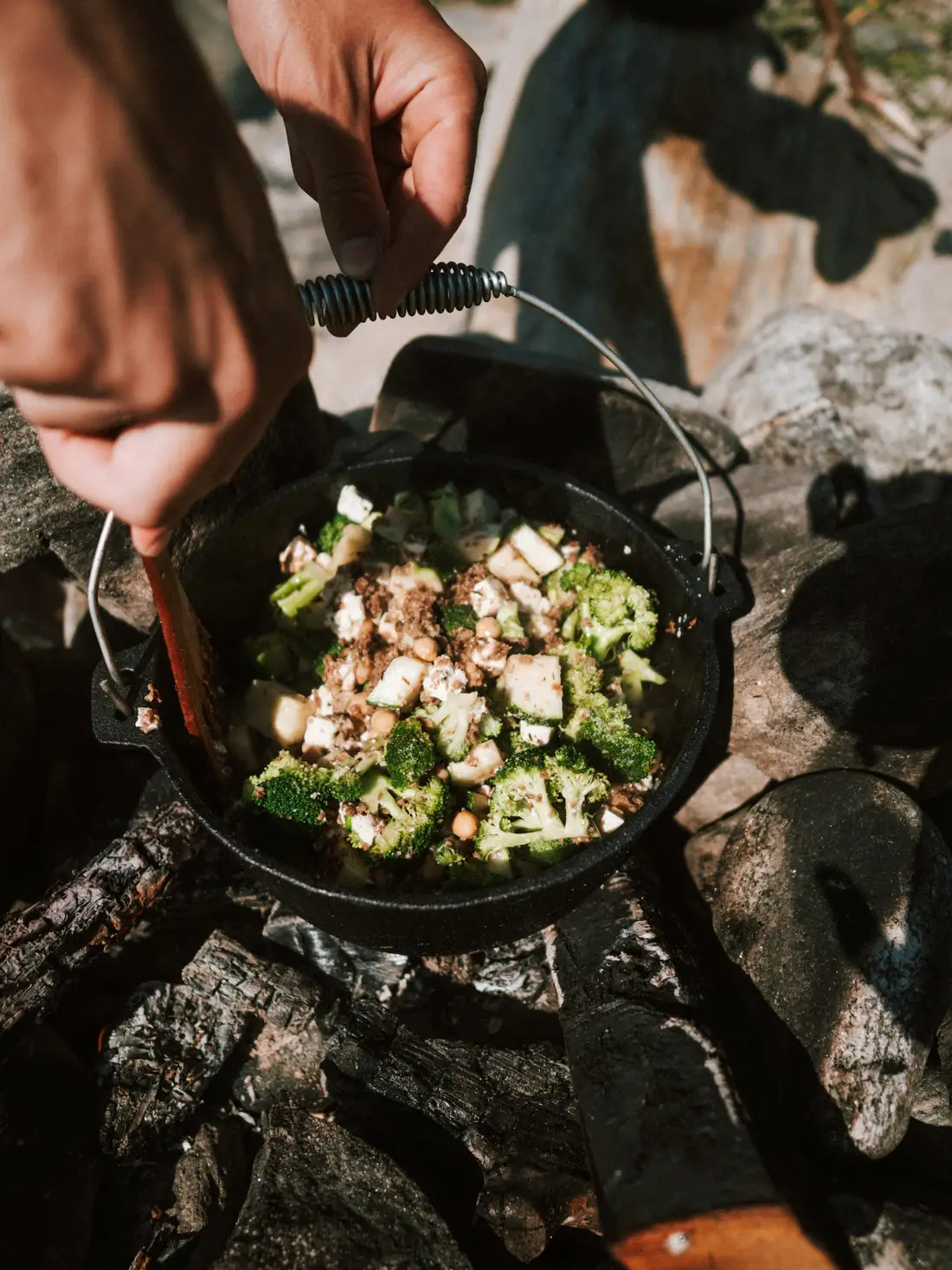
Cooking over coals can be wonderful, especially with a cast-iron pan or Dutch oven. But in western summers, fire restrictions are common and can change quickly. When fires are allowed:
- Use the existing fire ring; do not build new ones.
- Buy firewood locally or from the campground to avoid spreading forest pests.
- Keep fires small and cook over coals, not tall flames.
- Keep water and a shovel nearby, and drown, stir and feel the ashes until cold before leaving.
Cooking at altitude
Many western campgrounds sit at 6,000 feet or higher. Water boils at a lower temperature as elevation rises, so foods that cook in water, such as pasta, rice and dried beans, take longer. Use lids to save fuel, choose quick-cooking versions of grains, and allow extra time. Baked goods in a Dutch oven may also need adjustment.
Keep cold food cold
Food safety still applies outdoors. Perishable food should stay at or below 40°F.
- Pre-chill your cooler overnight with sacrificial ice.
- Use block ice or frozen water bottles; they last longer than cubes.
- Pack in reverse order: last-day food at the bottom, first-night dinner on top.
- Use a second cooler for drinks, since it gets opened most often.
- Keep coolers in shade, covered with a blanket or sleeping pad.
- Drain melt water only where allowed, and keep raw meat sealed to avoid cross-contamination.
A camp kitchen is only as clean as its last dish. Wash as you go and the evening stays easy.
Protect food from wildlife
In black bear country, use the provided food lockers or approved containers, and follow posted regulations. Never leave food, coolers or trash unattended, even for a short walk. Smaller animals such as squirrels, jays and ravens are quick to take advantage, too. Keep a closed trash bag and pack everything out if the campground lacks bins.
Washing up the low-impact way
- Scrape plates and pots clean into the trash before washing.
- Wash with a small amount of biodegradable soap and hot water.
- Strain dishwater through a mesh strainer or cloth; put the bits in the trash.
- Dispose of gray water according to campground rules or, in dispersed areas, scatter it widely at least 200 feet from water sources.
Our Leave No Trace explainer covers waste disposal in more detail.
Hot drinks and hydration
It is easy to forget to drink enough water at camp, especially in dry, high country where sweat evaporates before you notice it. Keep a filled water jug on the table so refills are effortless, and make a habit of drinking a full glass with every meal. Hot drinks are a camp ritual worth planning for: coffee, tea, cocoa or a cup of broth warms you up on cold mornings and doubles as hydration. Boil a full pot at once and pour into an insulated bottle, so the next round is ready without relighting the stove. In the evening, a warm drink before bed helps you stay comfortable through a cold night.
Small upgrades worth making
- A wind screen for the stove to save fuel on breezy evenings.
- A collapsible water jug with a spigot for hand washing.
- A long-handled spatula and heat-resistant gloves.
- A small spice kit with salt, pepper, chili flakes and a favorite blend.
Cooking with little ones? Our camping with kids guide has easy, kid-friendly meal ideas.
Key takeaways
- Plan meals you already know how to cook at home, and prep at home where you can.
- Use a stove as your main heat source; fires are a bonus when allowed.
- Keep cold food cold with pre-chilled coolers and frozen water bottles.
- Store food and trash properly to protect wildlife.
- Strain dishwater, scatter it away from water and pack out food scraps.
Quick FAQ
Why does water take longer to boil at altitude?
At higher elevations, air pressure is lower, so water boils at a lower temperature. Foods like pasta and rice can take longer to cook through. Lids help, and so does a little extra fuel.
Can I cook over a campfire?
Often, yes, in established fire rings when fires are allowed. But fire restrictions are common in western summers. Always bring a stove so dinner does not depend on a fire.
How long will ice last in a cooler?
It depends heavily on the cooler, the starting temperature and the weather. Pre-chilling the cooler, using block ice or frozen bottles, keeping it in shade and opening it rarely all extend ice life.