The First-Time Camping Checklist: What You Actually Need
A calm, practical checklist for your first camping trip in the American West, organized by system so nothing important gets left at home.
Your first camping trip should be about the evening light, a warm meal and a good night's sleep, not about realizing at dusk that the tent poles are still in the garage. A good checklist prevents that. But the most useful checklists are not endless lists of gadgets. They are organized by system, so you can see at a glance whether each part of your camp is covered.
This guide is written for first-timers heading to a developed campground in the Sierra Nevada, the Great Basin or similar western terrain, with a car nearby. Adapt it as you gain experience.
Before you pack: three quick checks
Gear depends on conditions, so start with information:
- The forecast for your campsite, not the nearest city. A town in the valley can be 20 or 30 degrees warmer than a campground a few thousand feet higher. Look up a point forecast for the actual location.
- The campground's amenities. Is there potable water? Toilets? Food lockers? Fire rings? Is the site reservable or first-come, first-served?
- Current restrictions. Fire restrictions, closures and food-storage rules change through the season. Check the managing agency's alerts page.
System 1: Shelter
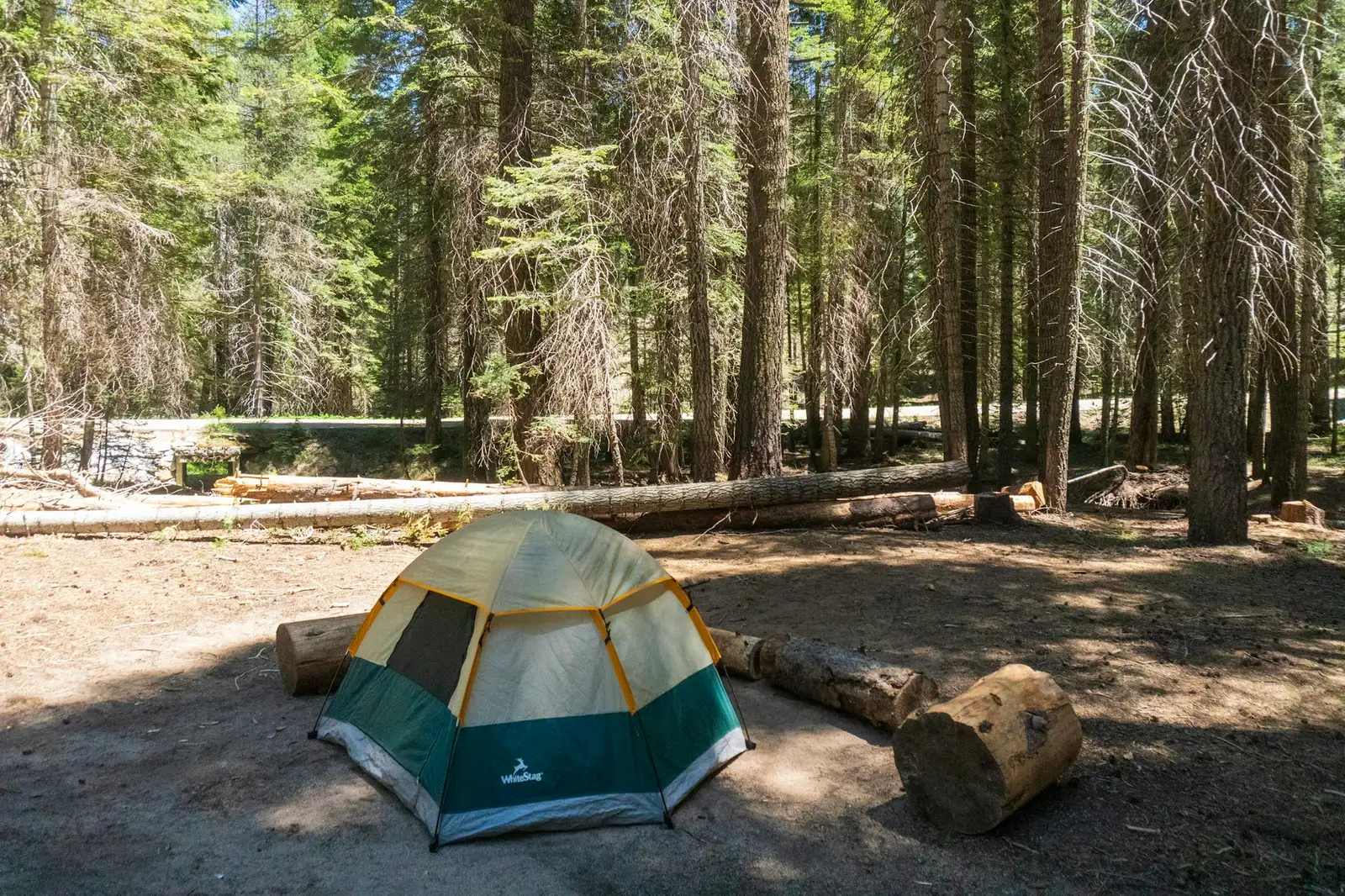
- Tent with body, rainfly, poles and stakes. Count the stakes.
- Footprint or ground cloth, cut slightly smaller than the tent floor.
- A few extra stakes and guylines for wind.
- Small mallet, or plan to use a rock.
- Optional: a tarp for shade or rain over the picnic table.
Practice pitching the tent once at home. It is the single best way to avoid a frustrating first evening.
System 2: Sleep
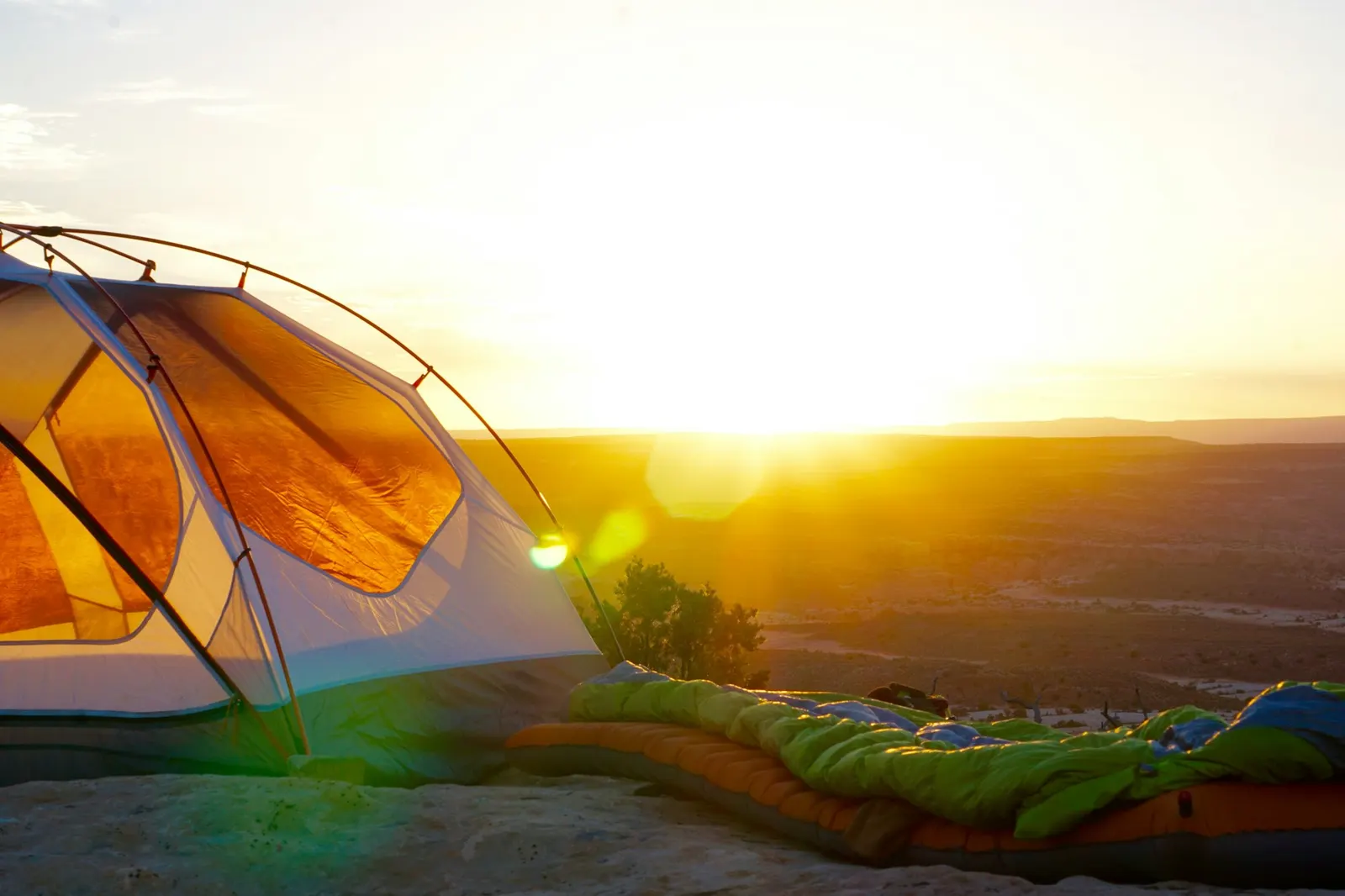
This is where comfort is won or lost. Mountain nights are cold, even in summer.
- Sleeping pad. Insulation from the ground matters more than cushioning. Look at the R-value; higher numbers mean more warmth.
- Sleeping bag. Choose one whose comfort rating is close to or below the lowest temperature forecast.
- Pillow, or a stuff sack filled with a fleece.
- Sleep clothes: a dry base layer, warm socks and a beanie reserved for the night.
System 3: Kitchen
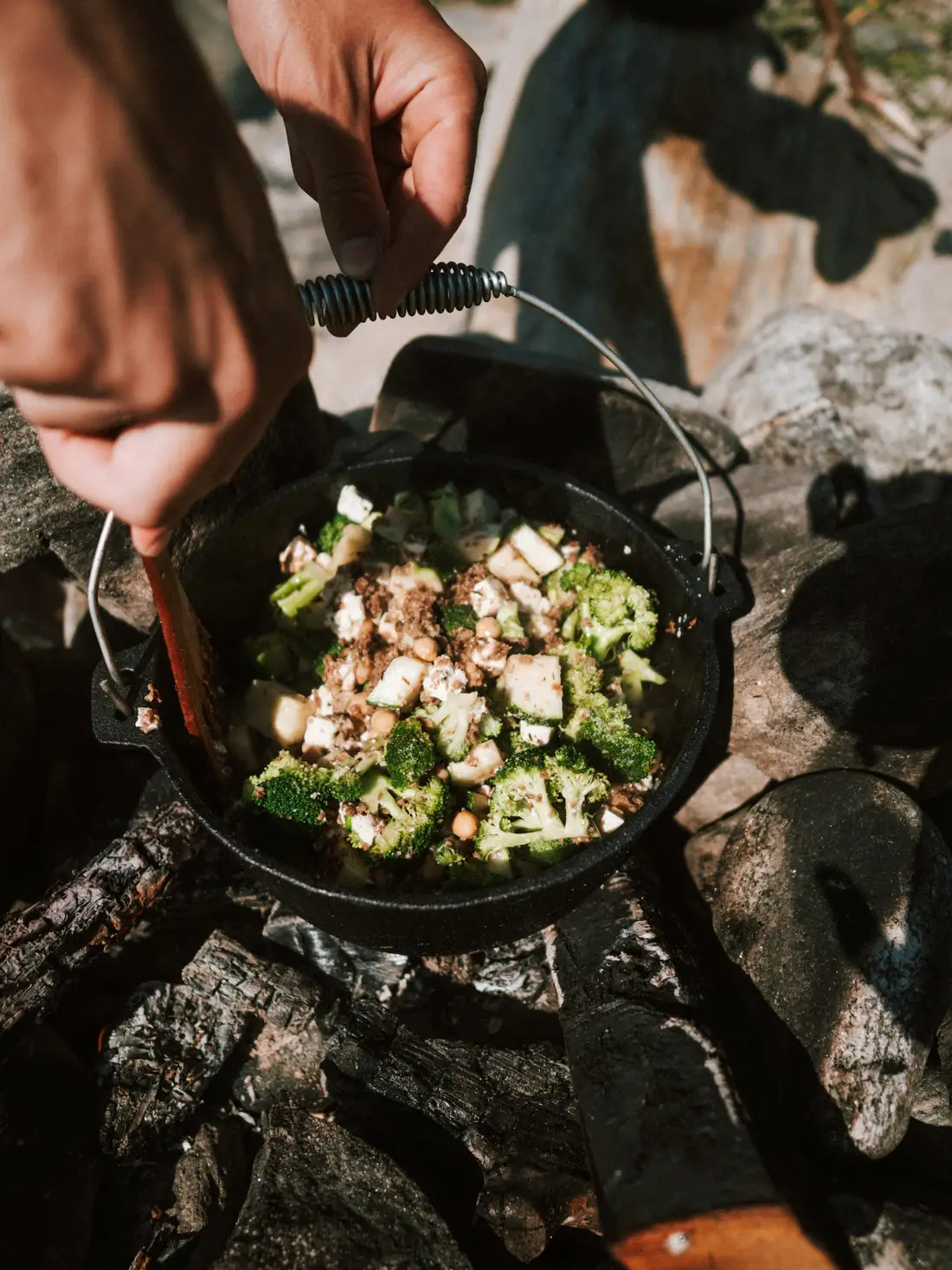
Keep the first trip simple. Plan meals you have cooked at home and can make in one pot or one pan.
- Stove, fuel and two ways to light it (lighter and matches).
- Pot, pan, spatula, serving spoon and a sharp knife.
- Plates, bowls, mugs and utensils for everyone.
- Cooler with ice, plus a dry food bin.
- Water containers, even if the campground has a tap.
- Wash kit: small basin, biodegradable soap, sponge, a quick-dry towel.
- Trash bags and resealable bags to pack out everything.
- Can opener, cutting board and paper towels.
For menus and techniques, read our guide to camp cooking basics.
System 4: Clothing
Western weather swings fast. Pack layers you can add and remove:
- Sun layer: breathable long sleeves, a wide-brim hat and sunglasses.
- Insulation: a fleece or puffy jacket. Even July evenings can call for it.
- Shell: a rain jacket that also blocks wind.
- Legs: hiking pants or shorts, plus warmer pants for evening.
- Feet: broken-in shoes or boots, camp sandals and extra socks.
Avoid cotton as a base layer in cold or wet conditions; it stays damp and pulls heat from your body. Our guide to layering for cold nights explains why.
System 5: Safety and navigation
- Headlamp per person, plus spare batteries or a power bank.
- First-aid kit with blister care, pain relievers and any personal medications.
- Sunscreen and lip balm with SPF.
- Map of the area and offline maps on your phone.
- Water treatment if you will use natural water sources.
- Insect repellent.
- Multi-tool or knife and a roll of repair tape.
System 6: Camp comfort
These are optional but make a first trip feel easy:
- Camp chairs and a lantern for the table.
- A small broom or brush to keep the tent floor clean.
- Cards, a book, binoculars or a star chart.
- Hand sanitizer and a toilet kit in case facilities run out of supplies.
The best checklist is the one you update after every trip. Cross out what you never used and add what you wished you had.
The night before you leave
Lay everything out by system and check it off. Charge devices, freeze water bottles to use as ice packs, and print or download confirmation details if your site is reserved. Leave your trip plan with someone at home: where you are going, when you expect to return, and who to call if you do not check in.
When you arrive
Aim to reach camp with a few hours of daylight. Set up the tent first, then the kitchen, then everything else. Walk the site to find the toilet and the water tap, and read the bulletin board for local notices. Then sit down, take a breath, and enjoy it. For tips on choosing the best spot within a site, see how to choose a campsite.
Key takeaways
- Pack by system (shelter, sleep, kitchen, clothing, safety) rather than from one long list.
- Your sleeping pad and warm layers matter more for comfort than the tent itself.
- Bring more water than you think, especially in dry western terrain.
- Check fire restrictions, food storage rules and the weather the week you leave.
Quick FAQ
Do I need to buy everything new for a first trip?
No. Borrowing from friends, renting from an outdoor shop or buying used gear are all good ways to try camping before investing. Focus any spending on a sleeping pad and bag that suit the temperatures you expect.
What is the most commonly forgotten item?
In our experience, it is usually something small: a lighter, a can opener, tent stakes, or a headlamp. That is why a checklist organized by system is so useful.
How much water should I bring?
If your campground has a tap, a few gallons for cooking and washing is usually enough. If it does not, plan on at least a gallon per person per day, and more in hot weather.