How to Choose a Campsite: Reading Terrain Like a Map
Learn how to pick a safe, comfortable and low-impact campsite in the western mountains and deserts by reading wind, slope, trees, water and sun.
Experienced campers can walk into a clearing and know within a minute whether it will be a good night. They are not guessing. They are reading a handful of signs that most of us walk past: the angle of the ground, the shape of the trees, where the wind is coming from, and where cold air and water will go after dark.
Those signs are learnable. This guide covers them in the order we check them, whether we are in a developed campground or a dispersed site in the national forest.
Start with the rules
Before reading the land, read the regulations. In developed campgrounds, you will camp in an assigned site and usually on a designated tent pad. In dispersed areas, rules vary: some places require you to camp in existing sites, some set minimum distances from roads, water or trails, and some prohibit camping entirely. Many wilderness areas require camping at least 100 or 200 feet from water and trails. Know the local rules first; they often make the decision for you.
Look up: hazards overhead
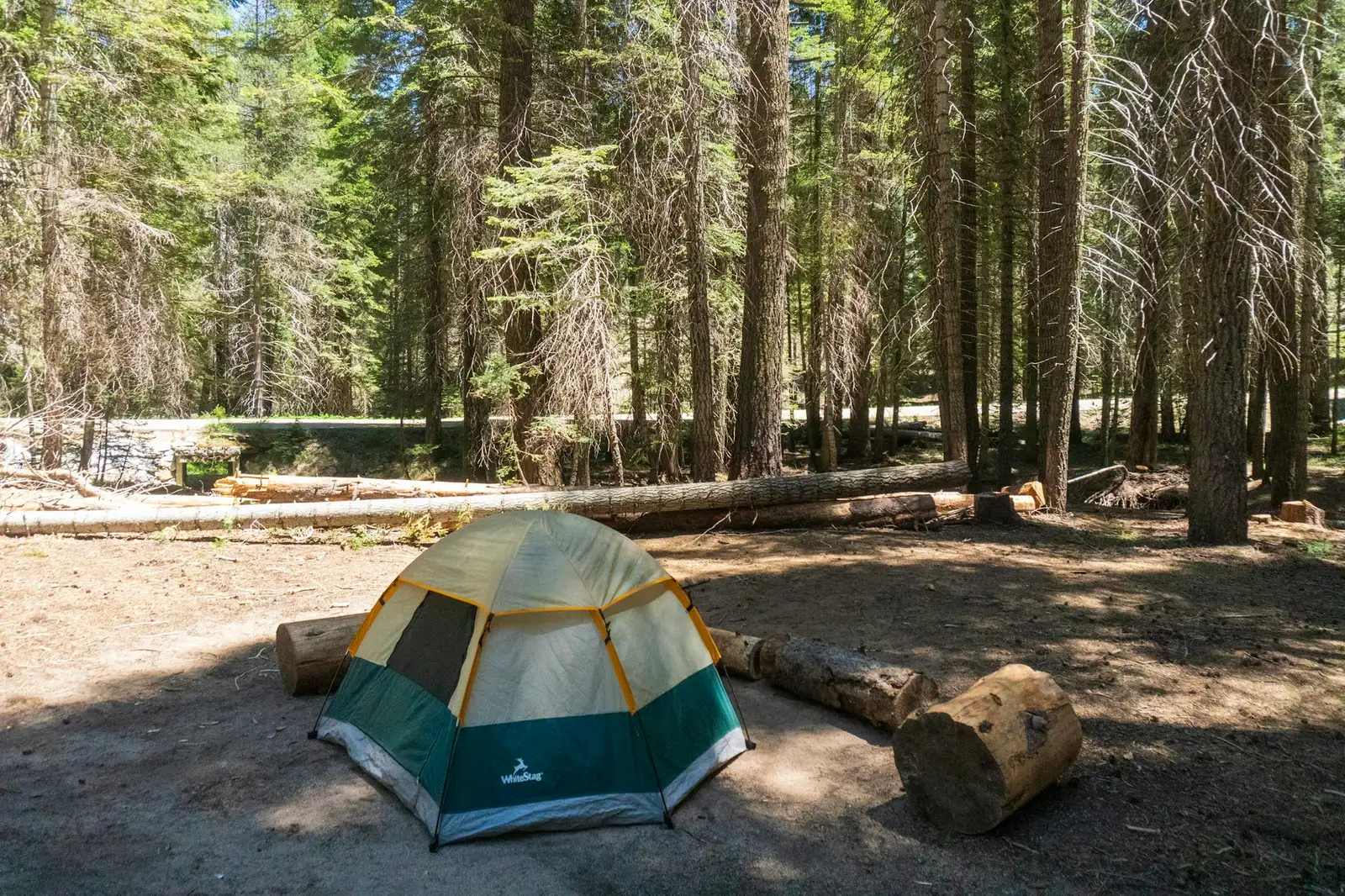
This is the most important check and the one most often skipped. Dead trees and broken limbs, sometimes called widowmakers, can fall without warning, especially in wind or after snow. Western forests have many standing dead trees after drought, beetle outbreaks and fires.
- Scan every tree whose height could reach your tent.
- Look for dead tops, hanging branches, cracks or lean.
- In burned areas, be especially cautious; fire-weakened trees can fall even on calm days.
If you are unsure, move.
Look down: the ground itself
Flat, but not a bowl
You want ground that is nearly flat. A very slight slope is fine; sleep with your head uphill. Avoid shallow depressions, which collect rainwater and cold air.
Durable surfaces
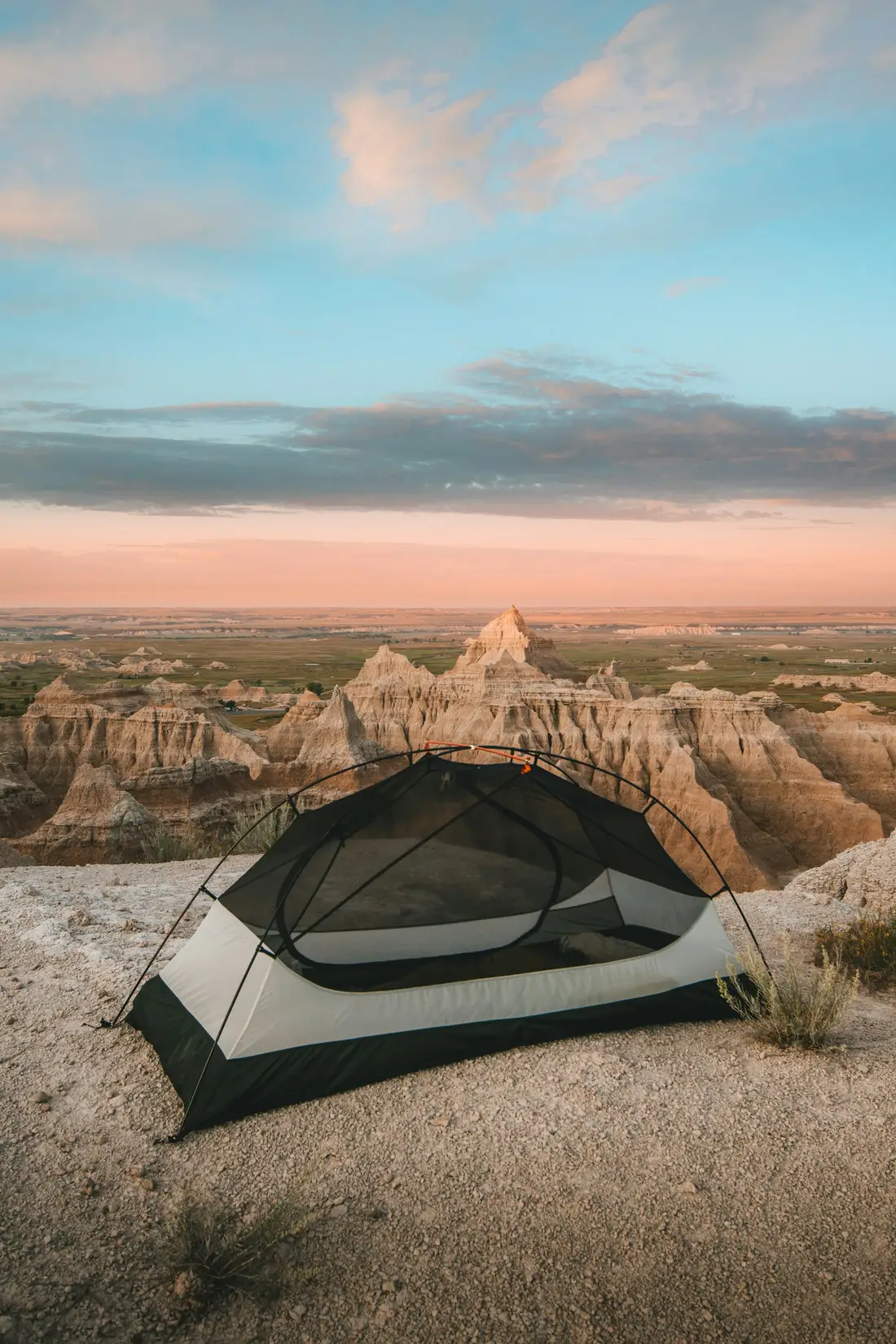
Choose ground that can handle the impact: established tent pads, bare soil, gravel, sand or rock slabs. Avoid pitching on meadows, wet ground or fragile plants. In popular areas, using an existing site concentrates impact in one place and lets surrounding ground recover. Our Leave No Trace explainer covers this principle in depth.
Hidden discomforts
Lie down on the spot before you pitch. You will find roots, rocks and pinecones you would never notice standing up. Also check for ant mounds and rodent burrows.
Read the wind
Western afternoons are often windy, especially on ridges, open basins and lakeshores. Wind affects warmth, noise, dust and how well your tent holds up.
- Use natural windbreaks: boulders, dense shrubs or a stand of trees.
- Point the narrowest, lowest end of the tent into the wind.
- Keep doors facing away from the wind to stop the tent from ballooning.
- Stake and guy out the tent fully, even if the evening seems calm.
Think about cold air and water
On clear, calm nights, cold air flows downhill like a slow liquid and pools in the lowest places. Meadows and valley floors can be many degrees colder than ground just a bit higher. Lakes and streams add moisture, making condensation and frost more likely. That is one reason Leave No Trace guidance suggests camping about 200 feet from water when outside developed sites: it is better for the shoreline and usually more comfortable for you.
Plan for the sun
The sun's path matters more than people expect.
- In cool mountain camps, an east-facing site gets early morning warmth and dries frost off the tent.
- In hot desert camps, you want shade from morning sun, so look for spots west of rocks, trees or a cliff.
- At high elevation, UV is strong; a shaded kitchen area makes long afternoons more comfortable.
For hot-weather specifics, read staying cool in desert heat.
Water: near, but not too near
Having water a short walk away is convenient. Being right next to it is not ideal. Besides the cold and condensation, shoreline camps disturb wildlife, damage vegetation and can affect water quality. In the desert, the rule is even stricter for safety: never camp in a dry wash, drainage or slot canyon. Flash floods can arrive from storms far away, with no rain at your location.
Wildlife and food
Look for signs of animal activity: game trails, scat or chewed food scraps left by previous campers. Set your kitchen and food storage area away from where you sleep, and follow local food storage rules, which may require lockers or bear-resistant containers. Never sleep with food or scented items in the tent.
A great campsite is found, not made. If a spot needs digging, cutting or clearing, it is the wrong spot.
Privacy and neighbors
Choosing a site out of sight and earshot of others improves everyone's experience. In dispersed areas, avoid setting up right beside another camp when other options exist. In developed campgrounds, keep your gear inside your site boundary and keep lights pointed downward.
A quick site-selection checklist
- Allowed here? Check regulations.
- Safe overhead? No dead trees or limbs.
- Durable and flat? Existing site, no vegetation damage.
- Protected from wind? Natural windbreak or good orientation.
- Away from water and drainages? At least 200 feet, and never in a wash.
- Sun and shade suit the season?
- Food storage plan ready?
Run through it a few times and it becomes second nature. New to all this? Start with our first-time camping checklist.
Key takeaways
- Check overhead for dead trees and limbs before anything else.
- Pick flat, durable ground that is already impacted, not fresh vegetation.
- Camp at least 200 feet from lakes and streams outside developed sites.
- Think about wind direction, morning sun and cold-air drainage.
- Never camp in a dry wash or drainage in the desert.
Quick FAQ
Is it better to camp high or low?
On calm, clear nights, cold air sinks into valley bottoms and meadows, so a spot slightly up the slope is often warmer. In storms, though, high ridges are exposed to wind and lightning. Mid-slope, sheltered spots are often best.
Can I clear rocks and branches to make a flat spot?
Small, loose items like pinecones can be moved and replaced when you leave. Avoid digging trenches, moving large rocks or cutting vegetation; choose a spot that is already suitable instead.
What if every site is taken?
In developed campgrounds, do not squeeze into a closed or occupied site. Have a backup campground or area in mind before you leave home, ideally at a different elevation.