Stargazing Camping Trips: Planning for Dark Western Skies
How to plan a camping trip around the night sky: choosing dark locations, timing with the moon, protecting night vision, staying warm and what to look for.
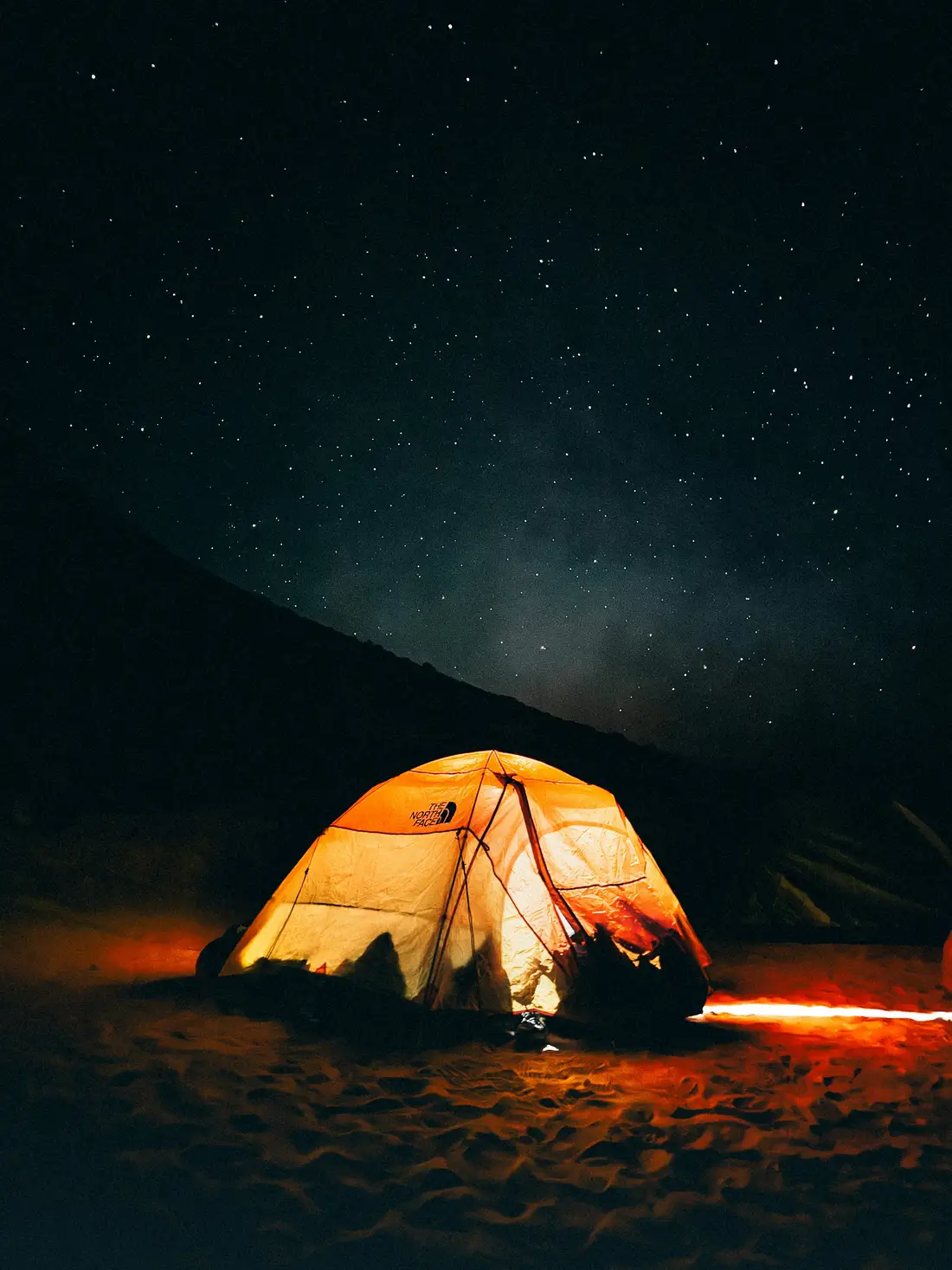
One of the great gifts of camping in the American West is the night sky. Far from city lights, in the clear, dry air of deserts and high mountain basins, the sky can fill with thousands of stars, the band of the Milky Way and the occasional streak of a meteor. Some of the darkest skies in the continental United States are found in this region, including at parks recognized for their dark skies, such as Great Basin and Death Valley National Parks.
With a little planning, any camping trip can become a stargazing trip.
Find dark skies
Light pollution from cities creates a glow that can be visible for many miles. To find darker skies:
- Choose locations far from major cities and towns, ideally with mountains or distance blocking their glow.
- Use a light pollution map to compare locations.
- Look for parks and areas certified or recognized for dark skies.
- Consider higher elevations, where thinner, drier air can improve clarity.
Deserts and the Great Basin are especially rewarding. See desert camping for planning tips in that terrain.
Time it with the moon
The Moon is beautiful, but a bright Moon washes out fainter stars and the Milky Way. For the darkest skies:
- Plan trips around the new moon, when the Moon is not visible at night.
- The days on either side of the new moon are also good, especially if the Moon sets early or rises late.
- Use a moon phase calendar or astronomy app to see moonrise and moonset times.
Check the weather and smoke
Clear skies are essential. Check cloud cover forecasts, not just precipitation. In summer and fall, wildfire smoke can haze the sky across large areas of the West, so check air quality and smoke forecasts as well. Summer afternoon thunderstorms often clear by night in the mountains, but not always.
Protect your night vision
- Use a headlamp with a red-light mode, or cover a white light with red film.
- Turn phone screens to the lowest brightness and use night or red modes.
- Keep lanterns low, shielded and pointed down.
- Avoid lighting up other campsites, out of courtesy and to protect everyone's view.
Stay warm while you watch
Stargazing means sitting still for long periods, often late at night, when temperatures are lowest. Clear skies, ideal for stars, also let heat escape quickly. Plan for it:
- Dress in warm layers, including a hat and gloves, even in summer at elevation.
- Bring an insulated pad or reclining chair so you are not on the cold ground.
- Use your sleeping bag as a blanket.
- Bring a thermos of a hot drink.
For more on keeping warm, see layering for cold nights.
What to look for
With the naked eye
- The Milky Way: the hazy band of our home galaxy.
- Constellations: start with easy ones like the Big Dipper, Orion in winter or Scorpius in summer.
- Planets: bright, steady points that do not twinkle as much as stars.
- Satellites: steady moving points of light, especially shortly after dusk.
- Meteors: annual showers like the Perseids in August and the Geminids in December can produce many meteors per hour under dark skies.
With binoculars
- Star clusters such as the Pleiades.
- The Andromeda Galaxy, a faint smudge in autumn skies.
- Craters and mountains on the Moon on nights you are not chasing darkness.
- Rich star fields along the Milky Way.
No telescope required. Lie back, let your eyes adjust and the sky does the rest.
A simple stargazing kit
You do not need much to make a night under the stars more rewarding:
- Red-light headlamp: the single most useful item for preserving night vision.
- Binoculars: a standard 7x50 or 10x50 pair reveals far more than the naked eye.
- Star chart or planisphere: a rotating paper chart works without batteries or screen glare.
- Astronomy app: set to night mode, useful for identifying planets and satellites.
- Reclining chair or pad: looking straight up from a standard chair quickly strains your neck.
- Warm layers and a thermos: you will be still for a long time.
Keep everything in one small bag so you can find it by touch in the dark.
Safety in the dark
- Scout your viewing spot in daylight to know where cliffs, holes or cactus are.
- Stay close to camp, and tell others where you are.
- Watch your step; use red light for walking.
- In desert areas, be aware that some wildlife is active at night.
Share the night respectfully
Dark skies are a shared resource. Keep lights low, voices quiet and car headlights off when possible. Leave No Trace principles include being considerate of other visitors; protecting the night sky is part of that. See our Leave No Trace explainer.
Make it a family tradition
Stargazing is a wonderful activity for children. Bring a simple star chart, look for familiar shapes and count meteors together. It is also a great way to end a warm desert day; read staying cool in desert heat for how to structure those days around cool evenings.
Key takeaways
- Choose locations far from city lights; western deserts and high basins are ideal.
- Plan around the new moon and check cloud and smoke forecasts.
- Allow 20 to 30 minutes for eyes to adapt, and use red light to protect night vision.
- Dress warmly; clear desert and mountain nights get cold quickly.
- Keep lights low and shielded to share the dark with other campers.
Quick FAQ
When is the Milky Way most visible?
In the Northern Hemisphere, the bright core of the Milky Way is typically best seen from late spring through summer and into early fall, on moonless nights. Fainter parts of the Milky Way are visible year-round from dark sites.
Do I need a telescope?
No. The naked eye and a pair of binoculars reveal a great deal, including star clusters, the Andromeda Galaxy and craters on the Moon. A telescope is a later upgrade.
What about photographing the night sky?
A camera on a sturdy tripod with manual settings and a wide-angle lens is the basic setup. Use a red light while working, and be mindful of other campers when using any light.