
Winter changes the West. The Sierra Nevada can receive some of the deepest snowpacks in the lower 48, and high valleys of the Great Basin regularly see nights well below freezing. Campgrounds close, roads are plowed only to certain points, and trails disappear under snow. For campers willing to learn the skills, this means solitude and a very different kind of beauty.
Winter camping also carries real risks: hypothermia, frostbite, avalanches and getting lost when trails are covered. Treat this guide as an introduction, and build skills gradually, ideally with experienced companions or a formal course.
Start small
The safest path into winter camping looks like this:
- Cold-weather car camping first. Camp at a lower-elevation campground that stays open in winter, with your car nearby as a warm refuge.
- Then a short snow camp. Snowshoe or ski a short distance from a plowed trailhead and set up in non-avalanche terrain.
- Only then go farther. Multi-day trips or travel in avalanche terrain should follow training and experience.
Access and parking
Many mountain roads close at the snow line. In California, designated winter trailhead parking areas called Sno-Parks typically require a permit during the winter season. Other states and agencies have their own systems. Check road status, chain controls and parking rules before you leave, and carry tire chains when they may be required.
Avalanche awareness
Avalanches are the most serious hazard for winter backcountry travelers. Even a short trip can cross or camp below slopes that can slide.
- Check the local avalanche forecast before every trip. Regional avalanche centers publish daily forecasts for many Sierra and western mountain areas during the season.
- Camp in low-angle, forested terrain well away from the run-out zones of steep slopes.
- If your plans include avalanche terrain, take an avalanche safety course and carry and know how to use a transceiver, probe and shovel.
The winter sleep system
Staying warm at night is the core skill of winter camping.
- Sleeping pads: insulation from the snow matters more than the bag. Many winter campers use a combined R-value of 5 or more, often by stacking a closed-cell foam pad beneath an insulated inflatable pad.
- Sleeping bag: choose a bag rated for temperatures colder than you expect, and consider a liner to add warmth.
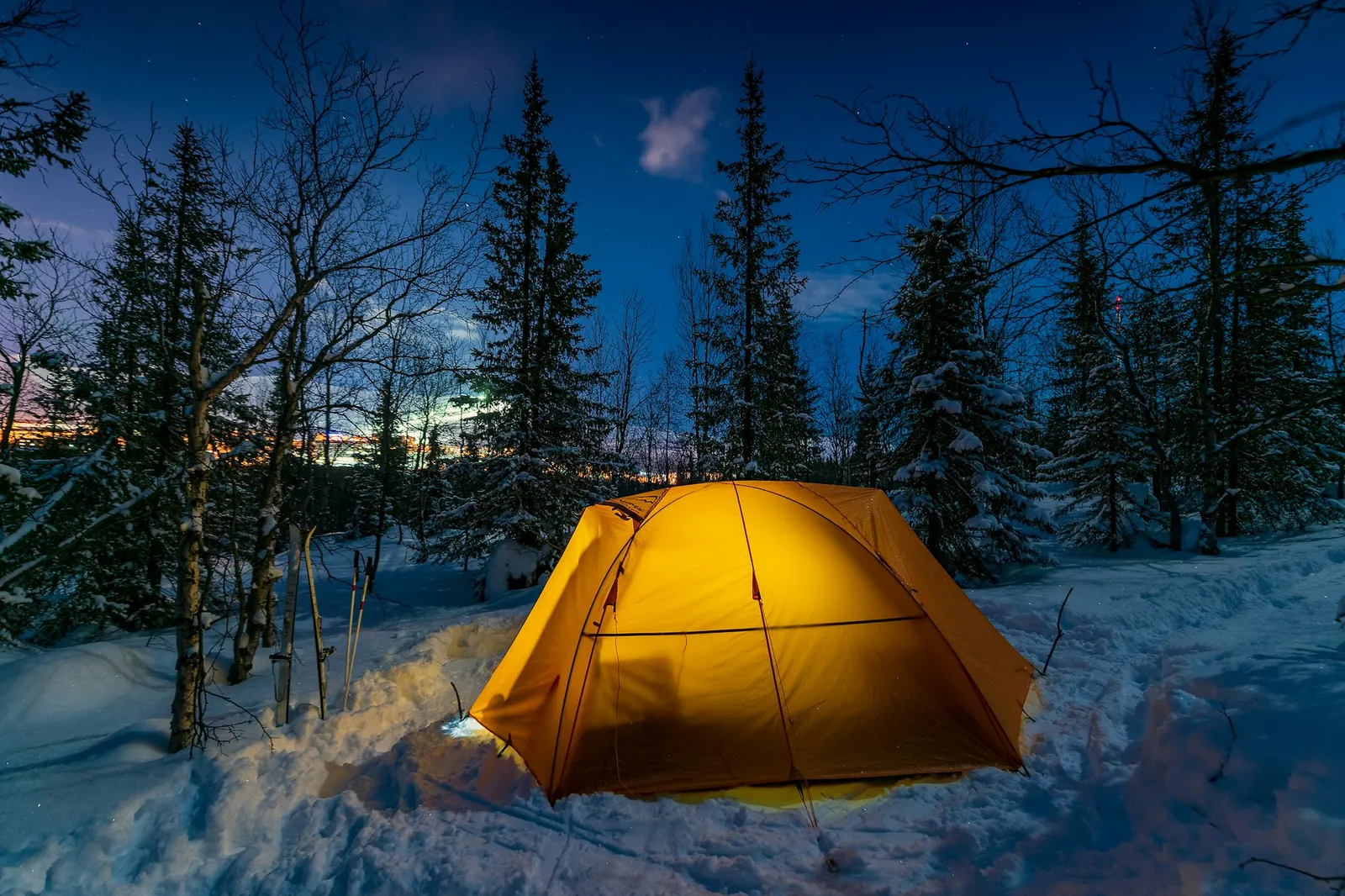
- Shelter: a sturdy tent able to handle wind and snow load, pitched on a platform of stamped-down snow. Let the platform set up for a while before pitching.
- Dry clothing: change into a dry base layer before bed. Damp clothes steal heat all night.
For a full strategy, see layering for cold nights.
Water and food
In winter, water usually means melting snow, which uses a lot of fuel and time. Bring more fuel than you would in summer, and use a stove that performs well in the cold. Keep water bottles insulated or stored upside down so the caps do not freeze shut. Eat more than usual: your body burns calories to stay warm. Warm, high-fat dinners and snacks before bed help through long nights. Our camp cooking basics guide includes cold-weather tips.
Never heat a tent with fuel
Carbon monoxide from stoves, heaters or lanterns can build to dangerous levels inside a closed tent or vestibule. Cook outside the tent or in a well-ventilated vestibule with doors open, and never use a fuel-burning appliance for heat while you sleep.
Recognizing cold injuries
- Hypothermia: early signs include shivering, clumsiness, slurred speech and poor decisions. Get the person into dry layers and a sleeping bag, give warm sweet drinks if they are alert, and seek help if they do not improve.
- Frostbite: look for numb, pale or waxy skin on fingers, toes, nose and ears. Keep extremities dry and covered, and do not rub affected areas.
A winter gear framework
Winter kit builds on three-season gear, with more warmth, more redundancy and tools for snow:
- Travel: snowshoes or skis suited to the terrain, poles with snow baskets and gaiters.
- Shelter: a sturdy tent with snow stakes or a plan for deadman anchors, plus a lightweight snow shovel for building a platform.
- Sleep: stacked pads, a cold-rated bag, a liner and dry sleep clothes in a waterproof bag.
- Clothing: base, mid and shell layers, a warm puffy jacket, insulated pants, spare gloves and a dry hat.
- Kitchen: a cold-capable stove, extra fuel, a larger pot for melting snow and insulated bottles.
- Safety: navigation tools, a headlamp with spare batteries, first-aid and repair kits, sun protection for snow glare and a way to call for help.
Keep batteries, phones and fuel canisters warm in an inside pocket or your sleeping bag; cold drains them quickly.
Short days, long nights
Winter days are short. Plan to reach camp with at least two hours of daylight left; setting up a snow camp takes longer than a summer one. Bring extra light, extra batteries kept warm in an inside pocket, and something to pass the long evening.
A gentler winter option: the desert
Not every winter trip needs snow. Low desert areas are often at their best in winter, with mild days and cold, clear nights. They offer a gentler introduction to cold camping. See desert camping for planning tips.
Neighboring squares
Winter camping draws on everything learned in tent camping and backpacking. Master those first, and winter becomes a natural next step.