
Backpacking turns camping into a journey. You carry shelter, food and water on your back, walk into terrain no road reaches, and sleep where the day ends. In the high Sierra, that can mean granite basins dotted with lakes and nights so clear the stars feel close. In the ranges of the Great Basin, it can mean long ridgelines and the deep quiet of country few people visit.
Because you are self-supported and often hours from help, the margin for error is smaller. This guide covers the planning that makes backpacking safer and more enjoyable.
Is backpacking the right square for you?
It is a good fit if you:
- Are comfortable hiking several miles with elevation gain on a day hike.
- Have done at least a few car or tent camping trips and know your sleep system works.
- Are willing to plan water sources, permits and a turnaround time in advance.
If you are newer, start with a single night on a well-used trail a few miles from the trailhead. The skills scale up quickly.
Planning a first route
A good first backpacking route is short, well traveled and forgiving. Look for these qualities:
- Distance: three to six miles to camp, so you arrive with energy and daylight to spare.
- Elevation gain: modest, ideally under 1,500 feet, especially if you are not acclimatized.
- Reliable water: a lake or permanent stream near camp, confirmed with a recent trip report or ranger station.
- Clear trail: a maintained path with signed junctions rather than cross-country travel.
- An easy exit: the same trail back, so you can turn around if weather, blisters or altitude become a problem.
Write down a simple plan: trailhead, route, campsite, expected return time and a turnaround time for each day. Leave a copy with someone at home who knows when to call for help if they do not hear from you.
Permits and regulations
Many western wilderness areas require a permit for overnight trips, and popular trailheads often use quotas during the summer season. Permits for some areas are released months in advance and can go quickly; others offer a share of walk-up permits. Rules also cover campfire use, group size, camping distance from water and trails, and food storage.
Always confirm with the managing agency, whether a national park, national forest or BLM office, before you go. For a deeper look at how reservations work, read reserving campsites on public lands.
Food storage in bear country
In much of the Sierra Nevada, approved bear-resistant food canisters are required for overnight trips, and in other areas they are strongly recommended. A canister protects your food, protects bears from becoming habituated, and keeps your trip from ending early. Plan meals so everything, including trash and scented toiletries, fits inside. Store it on the ground away from your tent at night, not hung in a tree, unless local guidance says otherwise.
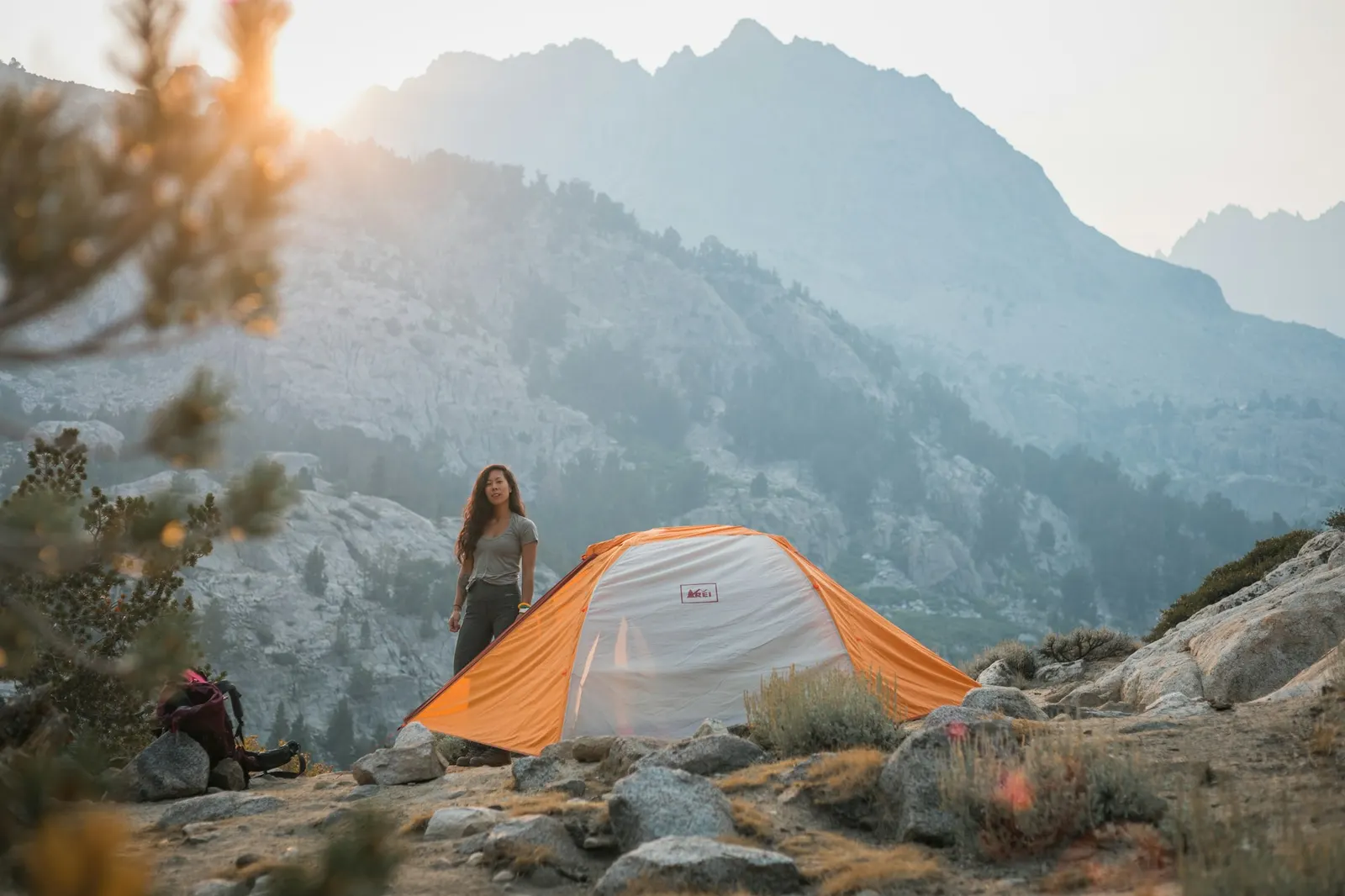
Water: find it, treat it, carry enough
Water planning shapes the route. In the high Sierra, lakes and streams are often plentiful in early summer but can shrink by late season. In the Great Basin and desert ranges, springs may be few, unreliable or seasonal.
- Treat all natural water with a filter, chemical treatment, UV device or by boiling. Clear water can still carry pathogens.
- Know your sources before you leave. Ask a ranger station about recent conditions.
- Carry for the gap. Plan the longest stretch between reliable sources, and carry enough to cover it with a buffer.
Altitude and pace
Many Sierra trails start above 7,000 feet and climb higher. Altitude sickness can affect anyone, regardless of fitness, typically with headache, nausea, fatigue or poor sleep. To reduce the risk:
- Spend a night at a moderate elevation before starting high.
- Climb gradually and keep the first day short.
- Drink water steadily and eat regularly.
- If symptoms worsen, descend. Going down is the most reliable treatment.
Building a lighter pack
A lighter pack is a more enjoyable pack, but safety items are not where you save weight. Focus on the big three first: shelter, sleep system and the pack itself. These usually account for the most weight. Then trim duplicates: one pot, one knife, one light. A simple, useful approach is to lay everything out on the floor and sort it into three piles: used every day, used for emergencies, not used. Leave the third pile at home next time.
Essential safety items to keep:
- Navigation: map and compass, plus a GPS or phone app with offline maps.
- Headlamp with spare batteries or a charged power bank.
- Sun protection, insulation layers and a rain shell.
- First-aid kit and a small repair kit.
- Fire-starting supplies and an emergency shelter.
- Extra food and water, and a way to call for help where available, such as a satellite messenger.
Weather on the trail
Summer afternoon thunderstorms are common in the Sierra and western ranges. Start early, aim to be off exposed ridges and summits by early afternoon, and know where you would shelter if lightning arrives. At night, even in August, high basins can drop below freezing. See layering for cold nights for a full strategy.
Camping lightly in the backcountry
Backcountry camps recover slowly. Choose established sites on durable surfaces, camp well back from water and trails, pack out everything you bring, and follow local rules on human waste. Our Leave No Trace explainer covers all seven principles with backcountry examples.
Neighboring squares
If backpacking in snow appeals, look at winter camping for the extra skills it demands. For something gentler, a lakeside walk-in camp delivers much of the scenery with less weight.